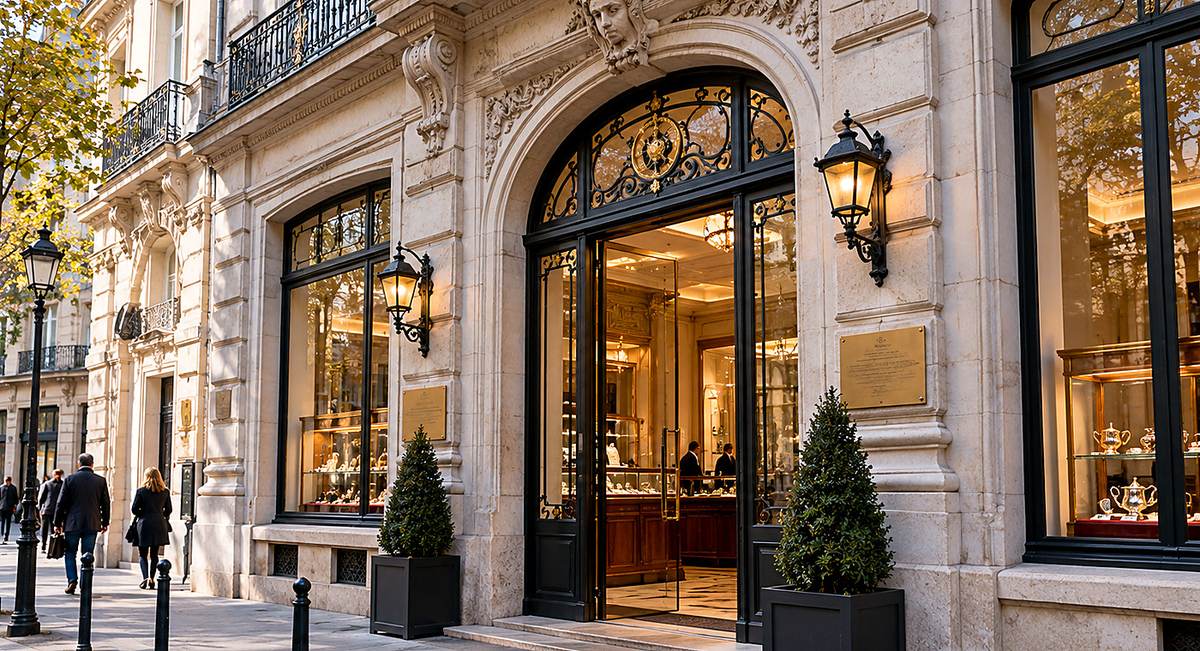
Silverware, an official category
Silverware and goldsmiths' work form one of the 17 categories of items accepted by the Mont-de-Piété of the City of Brussels. The institution, governed by the Act of 30 April 1848, devotes a specific page of its official website to these pieces.
Cutlery sets and serving ware
Cutlery sets and serving ware in solid silver are accepted, subject to a single published proviso: their total value must be enough for a loan to be offered. No minimum number of pieces is imposed by the silverware page.
Christofle, the only exception for silver plate
Silver plate is mentioned as accepted only for Christofle, whether cutlery sets or serving ware. Other plated pieces are not mentioned, although the page does not publish a list of refusals either.
The 300 g threshold for unsigned silver
On its jewellery page, the institution specifies that unsigned silver must weigh at least 300 g to obtain the minimum loan of €30. A handful of odd spoons is therefore likely to fall below this floor.
Signed silver from the major houses
Solid silver pieces signed Hermès, Delvaux, Tiffany & Co or Georg Jensen are accepted with no published weight threshold. These signatures also appear on the page on pawning jewellery in Belgium, which sets out the gold scale.
No price per gram for silver
Unlike gold, whose indicative scale is displayed, the silverware page gives neither a price per gram nor a minimum weight. The amount therefore results from the assessment made at the counter, based on the value expected at public auction.
Amount lent on a silver service
As with any pledge, the loan generally represents 50 to 70% of the estimated auction value. The file-opening fee amounts to 3.5% of that value, capped at €60, following the principles of valuing a pawned item.
Carrying a service to the Marolles
Pledges are deposited at Rue Saint-Ghislain 19, reached by buses 48 and 52, trams 92 and 93 or Brussels-Chapelle station. When a bulky lot requires a longer appraisal, it can be left on deposit.
Cost of a loan backed by silverware
The annual rate is 6.5% for 180 days, calculated per fortnight, then 10.5% from the first extension. Keeping a service pledged for a long time therefore makes the credit more expensive, especially as each extension costs a €4 administration fee.
If the silverware goes to auction
If the loan is not repaid, the service is sold at the public auctions held on Tuesday or Saturday. The depositor is notified by letter at least 30 days beforehand; the surplus, after deduction of capital, interest and fees, goes to them in full.
Inheritances and powers of attorney
A cutlery set received as an inheritance can be pawned by its new owner; if a relative comes in their place, a legalised power of attorney is required. Staff remain bound by professional secrecy under Articles 458 and 459 of the Criminal Code.
The French six-piece rule
At the Crédit Municipal de Paris, silverware is only accepted with a minimum of six pieces of each item of cutlery, a requirement absent from the Brussels page. Our page on pawning silverware in France details these practices.
Where to pawn your silverware
- Mont-de-Piété de la Ville de Bruxelles: Brussels public institution that accepts solid silver cutlery sets and tableware as well as Christofle silver plate.
Pawning a silver service step by step
- Look for hallmarks and signatures to tell solid silver from Christofle silver plate and unbranded plate.
- Weigh the unsigned silver: below 300 g, the €30 minimum loan is not reached.
- Pack the cutlery and dishes in their case to make transport to Rue Saint-Ghislain easier.
- Present the lot to the appraisers with identification proving a European address.
- Compare the offer, generally between 50 and 70% of the public auction value, then sign or leave.
- Repay within 180 days or extend, bearing in mind that the rate then rises to 10.5% a year.
Useful figures for silverware
| Criterion | Published rule | Comment |
|---|---|---|
| Unsigned silver | 300 g minimum | Threshold for the €30 loan |
| Silver plate | Christofle only | Cutlery sets and tableware |
| Price per gram of silver | Not published | Based on assessment at the counter |
| Amount lent | 50 to 70% of the auction value | Depending on the item |
| File-opening fee | 3.5%, capped at €60 | Charged once |
| Rate | 6.5% then 10.5% a year | Increase from the extension |
What to bring with your silverware
- Valid identity card or passport
- Proof of address if the European address does not appear on the document
- Legalised power of attorney to pawn someone else's silverware
- Invoice or certificate for a piece signed Hermès, Tiffany & Co or Georg Jensen, if you have one
Silverware pawning pitfalls
- Confusing silver plate with solid silver: apart from Christofle, plate is not mentioned among accepted items.
- Coming in with two or three unsigned pieces of cutlery weighing under 300 g, not enough to reach the minimum loan.
- Relying on a price per gram found elsewhere, when the Mont-de-Piété publishes none for silver.
- Extending a small loan several times without realising that €4 administration fees weigh heavily on small amounts.
- Ignoring the letter announcing the sale of the service, sent at least 30 days before it is entered for sale.
Pawned silverware: the answers
Does the Mont-de-Piété accept silver plate?
Only Christofle silver plate is mentioned, for cutlery sets and serving ware. Other silver-plated items do not appear on the silverware page; in the absence of a list of refusals, the appraisers decide case by case.
How much is lent on a silver cutlery set?
No price per gram is published for silver. The appraisers estimate the set's value at public auction, and the loan then generally reaches 50 to 70% of that valuation, with a minimum of €30 and a file fee capped at €60.
What weight of silver is needed to obtain a loan?
For unsigned silver, the institution indicates a minimum of 300 g to reach the €30 floor loan. Pieces signed Hermès, Delvaux, Tiffany & Co or Georg Jensen are accepted with no published weight threshold.
Can you pawn a relative's silverware?
Yes, provided you present a legalised power of attorney drawn up by the owner, in addition to your own identification. The general access conditions, being of age or emancipated and living in the European Union, still apply.
General information, up to date as of October 2026 and non-contractual: always check the terms with the Crédit Municipal or the institution concerned.