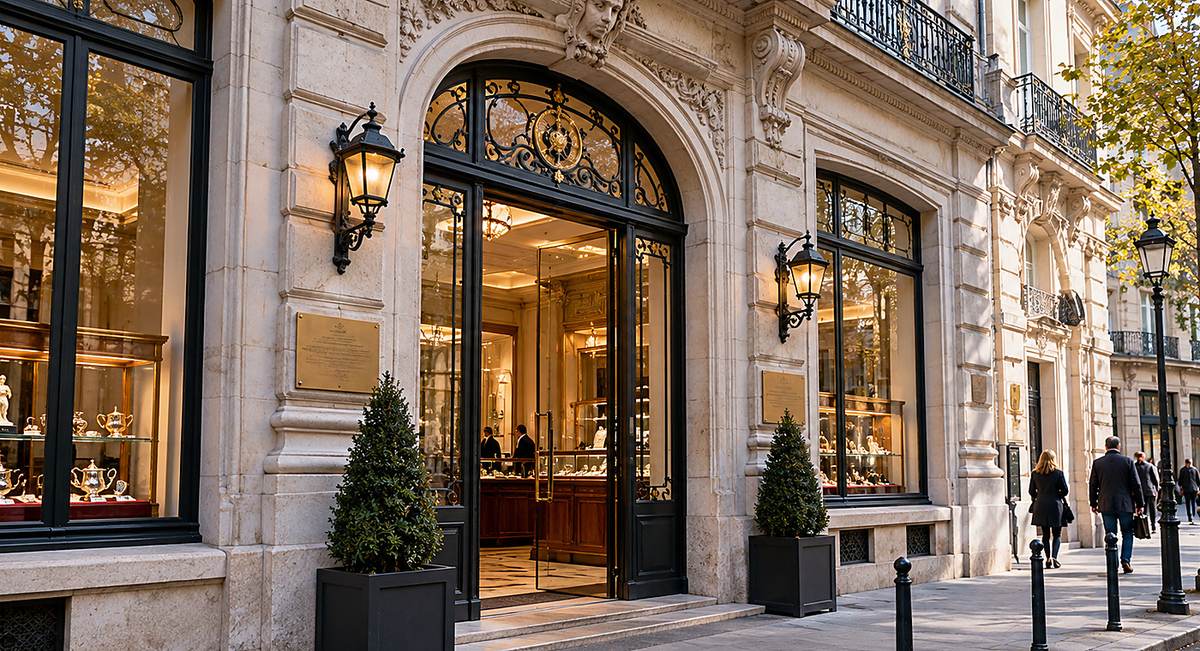
All gold jewellery is accepted
Antique or modern, signed or anonymous, all gold jewellery is accepted at the Mont-de-Piété of the City of Brussels. The jewellery and fine jewellery category in fact heads the list of 17 families of items published by the institution.
A scale per gram by fineness
The indicative scale recorded on 9 October 2026 gives the following amounts lent per gram: €52 for a 24-carat piece, €48 for 22-carat, €45 for 21-carat, €40 for 18-carat, €31 for 14-carat and €18 for 9-10 carat.
Bars, coins and platinum
24-carat gold bars and coins attract a slightly higher amount, €54 per gram according to the same record. Platinum is taken at €20 per gram. These figures follow metal prices and may change without any published notice.
Worked example for a chain
A 20 g chain in 18-carat gold would correspond, on the October 2026 scale, to an indicative loan of €800. The file-opening fee, set at 3.5% of the estimated value, is capped at €60 and deducted on signing.
The great jewellery houses
Creations by Boucheron, Bulgari, Cartier, Chaumet, Chopard, Demaret, Dinh Van, Fred, Pomellato, Tiffany & Co, Van Cleef & Arpels and Wolfers are accepted. Some Chanel and Christian Dior costume jewellery is also accepted, by way of exception.
Counterfeits refused, even in gold
A copy of a designer piece is refused even if it is made of real gold: at the slightest doubt about authenticity, the appraisers decline both loan and sale. Keeping cases, invoices and certificates reduces this risk at the counter.
Set stones and diamonds
Pieces with closed settings must be opened so the stones can be tested. For a diamond of at least 0.75 carat, mounted or not, an HRD, GIA or IGI certificate is required; the full rules are on the page on pawning diamonds in Belgium.
Signed silver jewellery
Solid silver jewellery signed Hermès, Delvaux, Tiffany & Co or Georg Jensen is accepted. Without a signature, silver must weigh at least 300 g to clear the €30 minimum loan, a threshold that a single ring obviously does not reach.
Taking advantage of a rise in gold
Renewal allows the appraisers to review the amount, particularly after a sharp rise in the gold price. The jewellery stays pledged and the contract restarts for 180 days, at the 10.5% annual rate that applies from the first extension.
The real cost of a jewellery loan
The published rate of 6.5% a year is counted per fortnight, so a quick redemption costs little. After an extension, it rises to 10.5%. Details of additional fees are on the page on the pawn loan interest rate in Belgium.
Jewellery sold at auction
About 5% of pledges end up at public sale, according to the institution. The depositor receives a free letter at least 30 days before the item goes on sale, then a notice one month after the auction if a surplus is due to them.
A French benchmark
In Nantes, the Crédit Municipal announced €42 per gram of 18-carat gold on its page consulted on 9 October 2026, an amount not dated by the institution. Our page on pawning jewellery in France compares the French institutions.
Lending institution
- Mont-de-Piété de la Ville de Bruxelles: Public pawnbroker that accepts all gold jewellery and publishes an indicative scale per gram according to fineness.
From jewellery to a cash loan
- Identify the fineness of each piece from its hallmark and weigh it to place the amount on the scale.
- Find cases, invoices and certificates, especially for Cartier, Bulgari or Van Cleef & Arpels pieces.
- Have a closed setting opened if necessary so the stones can be tested at the counter.
- Present the jewellery to the appraisers, without an appointment, with valid identification.
- Receive the loan immediately, in cash or by transfer, then note the 180-day maturity date.
- Ask for a renewal if the gold price rises markedly during the loan.
Indicative gold scale on 9 October 2026
| Metal or fineness | Indicative loan per gram | Note |
|---|---|---|
| 24-carat jewellery | €52 | Varies with the market price |
| 24-carat bars and coins | €54 | Highest amount on the scale |
| 22-carat gold | €48 | According to the published scale |
| 18-carat gold | €40 | Standard fineness in fine jewellery |
| 14-carat gold | €31 | As per the displayed scale |
| Platinum | €20 | Separate scale from gold |
Papers for pawning jewellery
- Valid identification proving an address in the European Union
- Purchase invoice for a piece from a major house
- Certificate of authenticity or original case
- HRD, GIA or IGI certificate for a diamond of 0.75 carat or more
- Legalised power of attorney if the jewellery belongs to someone else
Common mistakes with jewellery
- Confusing the gold price quoted on the markets with the Mont-de-Piété scale, which expresses an amount lent per gram, not a buy-back price.
- Bringing a gold copy of a designer piece in the hope of a loan by weight: counterfeits are refused.
- Forgetting to open a closed setting, which prevents the appraisers from testing the stones and delays the loan.
- Letting the loan run beyond 180 days without paying, which triggers late-payment interest of 0.5% of the capital per fortnight.
- Not asking for a revaluation when gold has risen sharply, even though renewal allows it.
Pawning jewellery in Brussels: your questions
How much does the Mont-de-Piété lend per gram of gold?
As recorded on 9 October 2026, the indicative scale gives €40 per gram for 18-carat gold, €31 for 14-carat, €52 for a 24-carat piece of jewellery and €54 for 24-carat bars and coins. It moves with the gold price.
Is unbranded jewellery accepted as a pledge?
Yes. All gold jewellery is accepted, whether signed or not, antique or modern. The amount then depends on fineness and weight. For unsigned silver, however, a minimum weight of 300 g is required.
Do you need an invoice to pawn jewellery?
An invoice is not required for all gold jewellery. It may be depending on the item, particularly for a designer piece whose authenticity must be established, and a certificate is compulsory for a diamond of 0.75 carat or more.
Will my jewellery be sold if I do not repay?
Only after a missed maturity date and a free letter sent at least 30 days before it is entered for sale. According to the institution, 95% of loans are repaid. If it is sold, the surplus net of the debt is paid to you.
General information, up to date as of October 2026 and non-contractual: always check the terms with the Crédit Municipal or the institution concerned.