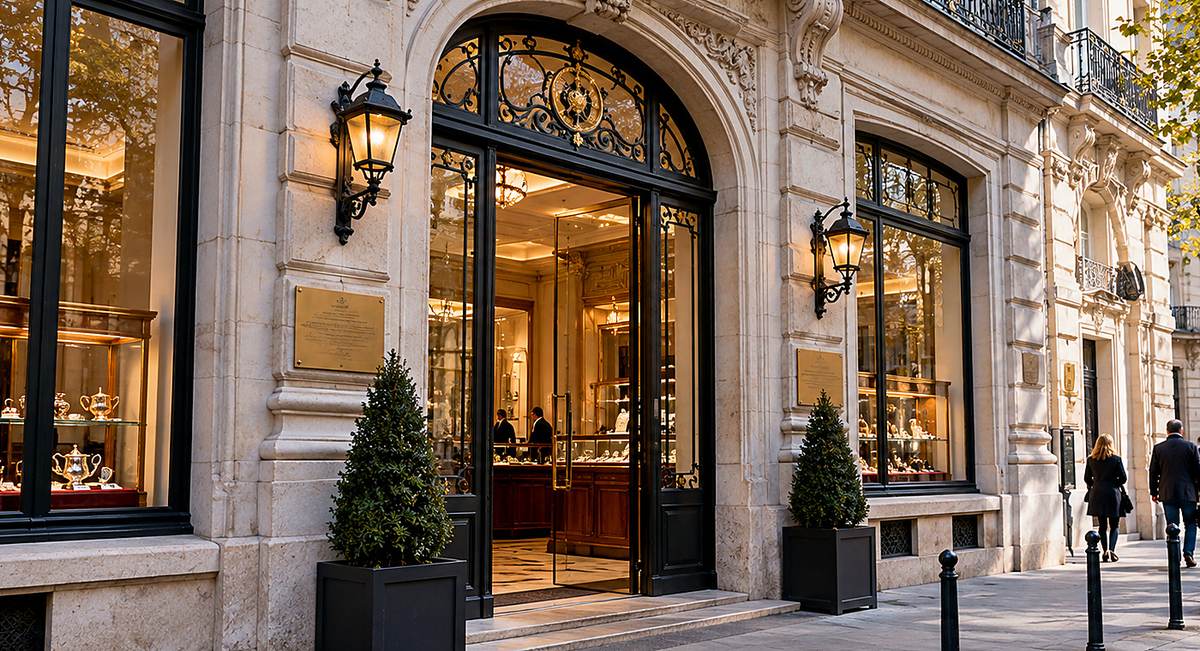
From 1637 to 1918: from Mont-de-Piété to Crédit Municipal
The Paris Mont-de-Piété was authorised on 27 March 1637, re-established by letters patent in December 1777, and Napoleon then granted it the monopoly on pawn lending in February 1804. On 24 October 1918 it became the Crédit Municipal de Paris.
What article L514-1 has said since the 2014 ordinance
In the wording introduced by ordinance no. 2014-1332 of 6 November 2014, article L514-1 defines these institutions as municipal public bodies for credit and social assistance, tasked with fighting usury through loans secured on tangible pledges, on which they hold the monopoly.
Authorisation from the European Central Bank
Paragraph II of the same article makes the institutions' activity subject to authorisation granted by the European Central Bank. They therefore fall under banking supervision, which clearly sets them apart from gold-buying counters and from lenders operating between private individuals.
Articles D514-1 to D514-22, the basis of all operations
Decree no. 2008-1404 of 19 December 2008 wrote into article D514-1 the power to lend to any natural person against tangible movable goods. Service-Public factsheet F1354 refers to articles D514-1 to D514-22 for the full set of operations.
Why your bank cannot offer you one
Service-Public puts it bluntly: you cannot go through your usual bank, and no income conditions are required. A company offering a loan against your watch without being a Crédit Municipal is therefore operating outside the legal framework.
Forty-five branches listed by the institutions
The contact page of the pretsurgage.fr website, linked from Service-Public, lists 45 branches, from Ajaccio and Bastia to Roubaix, Belfort or Perpignan. The number of legally distinct institutions is not given; several branches belong to the same institution, such as those around Toulon.
Paris, the country's busiest counter
Located at 55 rue des Francs-Bourgeois in the 4th arrondissement, the Crédit Municipal de Paris reports around 600 transactions a day in 2026. The official government directory also publishes entries for Bordeaux, Perpignan, Mâcon and Saint-Étienne.
Two legal ceilings on the amount lent
Article D514-8 sets the limit at four fifths of the valuation by weight for gold, silver and platinum, and at two thirds for other items. In practice, the Crédit Municipal de Paris says it generally lends between 50% and 80%.
Six months, one year, never more than two years
The term is decided by each institution's supervisory and guidance board: six months in Strasbourg, one year in Paris. Article D514-7 forbids going beyond two years including extensions, as explained on the page about the length of a pawn loan.
No withdrawal right and no early repayment penalty
Factsheet F1354 and the Paris general terms of 1 May 2026 exclude the withdrawal right that normally applies to consumer credit. In return, the borrower can settle the debt whenever they wish, at no extra cost, and recover the item straight away.
Vehicles: a local exception in Nantes and Dijon
The joint website of the institutions presents pledging a vehicle as something offered exclusively in Nantes and Dijon. Motor vehicles are missing from the Paris list; our page on borrowing against a car sets out the other solutions available.
What about the overseas departments?
No Crédit Municipal appears in the lists of institutions published by IEDOM for 2023, whether in the French Antilles, French Guiana or Réunion. The page devoted to pawn loans in Guadeloupe explains how to protect yourself in that situation.
Institutions and bodies mentioned
- Crédit Municipal de Paris: Paris institution descended from the 1637 Mont-de-Piété, with general terms updated on 1 May 2026.
- Crédit Municipal de Strasbourg: Alsatian institution publishing a detailed FAQ with a renewable six-month term and worked cost examples.
- Service-public.gouv.fr: Official French government website, whose factsheet F1354 summarises the rights of a pawn borrower.
- Légifrance: Official publication of the Code monétaire et financier, whose articles D514-1 to D514-9 govern valuation, term and amount.
Getting a loan from a French institution
- Check the directory of institutions to find the nearest branch and its opening hours for deposits.
- Make sure, using the institution's list, that the item belongs to one of the accepted categories.
- Go to the counter with the required documents and the item, by appointment if the institution asks for one.
- Let the appraiser draw up the valuation slip, which states the estimate and the loan amount in words.
- Sign the contract, which must show the annual percentage rate of charge and the total amount repayable.
- Redeem the item on the due date or request an extension within the two-year legal limit.
Main parameters of Crédit Municipal lending
| Parameter | Rule or value | Source |
|---|---|---|
| Maximum amount, precious metals | 4/5 of the valuation by weight | Article D514-8 CMF, in force since 2008 |
| Maximum amount, other items | 2/3 of the valuation | Article D514-8 CMF |
| Maximum term | 2 years, extensions included | Article D514-7 CMF, since 1 May 2011 |
| Minimum loan in Paris | 30 euros | Crédit Municipal de Paris, 2026 |
| Rate applied | According to each institution's schedule | Service-Public, factsheet F1354 |
What to bring to the counter
- Valid identity document with a photograph
- Proof of address less than three months old
- Bank account details for a current account
- Proof of ownership for items that require it
- The item to be pawned
Common misunderstandings about the Mont-de-Piété
- Believing that a gold-buying counter offers pawn loans: it buys the item, which you will never get back, unlike a deposit at the Crédit Municipal.
- Thinking the institution will pursue you after the sale: if the hammer price does not cover the debt, Service-Public confirms that nothing more is owed.
- Assuming every institution applies the same rates, when each one sets its own schedule and storage fees.
- Counting on an automatic extension: it can be refused and never allows a single contract to run beyond two years.
- Depositing an item without carefully keeping the pawn ticket, which is essential to redeem or renew it.
The Crédit Municipal in questions
What is the difference between a Mont-de-Piété and a Crédit Municipal?
They are the same institution under two names. The monts-de-piété were turned into Crédit Municipal institutions in 1918; the old name is still in everyday use. The Crédit Municipal de Paris is thus the direct heir of the Mont-de-Piété authorised in 1637.
How many Crédit Municipal institutions are there in France?
The joint website of the institutions, referenced by Service-Public, lists 45 branches in mainland France and Corsica. No source consulted publishes the number of legally distinct institutions, as some branches belong to the same one, such as Puget-sur-Argens, attached to Toulon.
Can a foreign national take out a pawn loan in France?
No nationality requirement appears on the Service-Public, Paris or Strasbourg pages. The Crédit Municipal de Paris does, however, require proof of address in France and a current account, which restricts access for non-residents.
Is the Crédit Municipal a bank?
It is a municipal public body for credit and social assistance, authorised by the European Central Bank under article L514-1. Some institutions also offer other products, but only lending against tangible pledges is reserved to them by law.
Official sources
Liste des caisses de crédit municipalpretsurgage.fr
Annuaire de l'administration, Crédits municipauxlannuaire.service-public.gouv.fr
Décret n° 2008-1404 du 19 décembre 2008legifrance.gouv.fr
General information, up to date as of October 2026 and non-contractual: always check the terms with the Crédit Municipal or the institution concerned.