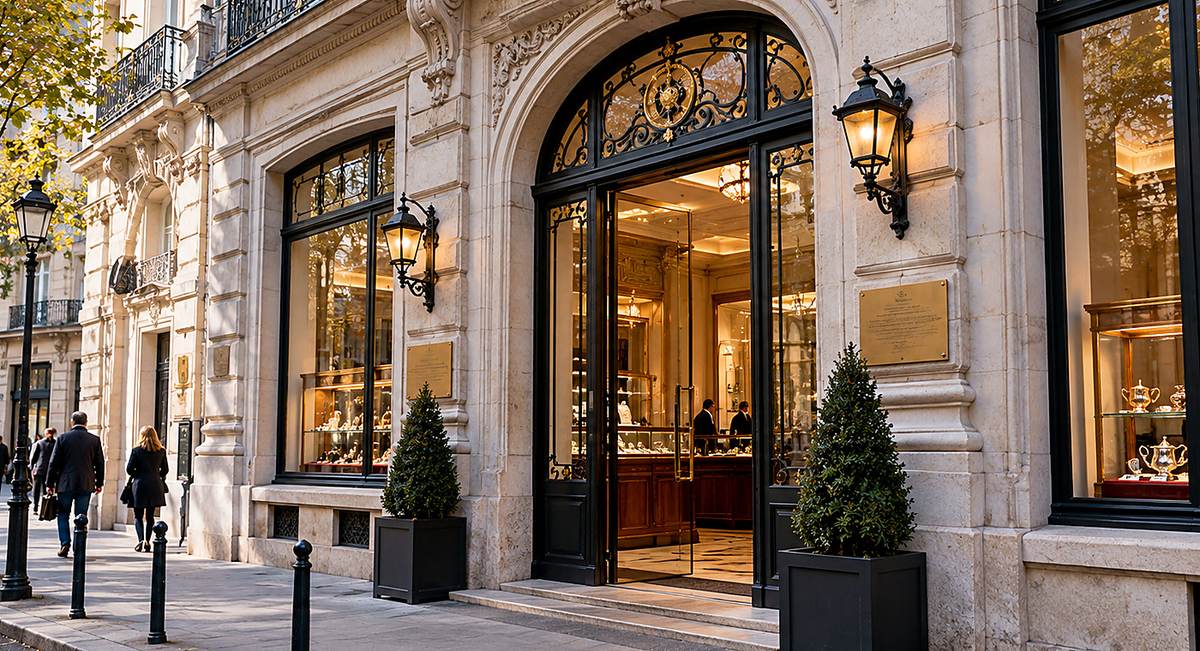
No Crédit Municipal in the province
The French model, in which public institutions hold the monopoly on pledges, has no Quebec equivalent. The Office québécois de la langue française does have a terminology entry for crédit municipal, but no public institution of this kind lends against pledges in Quebec.
A private trade subject to licensing
Pawn loans are granted by merchants. According to the Office de la protection du consommateur, they must hold a money lender's licence, issued by the president of the Office, before starting business. The OPC expressly mentions pawn loans.
No exemption for pawnbrokers
Licence exemptions cover financial institutions, such as banks, credit unions and trust companies, as well as credit secured by hypothec, referred to in section 18 of the implementing Regulation. None applies to pawnbrokers, all of whom need the licence.
The special case of microcredit
Microcredit organisations remain subject to licensing, but are exempt from fees if they are not-for-profit, lend at most $5,000 and charge a credit rate of no more than 5%. This regime does not cover commercial pawn counters.
The Consumer Protection Act
Money lenders fall under the Consumer Protection Act, CQLR, chapter P-40.1. The list published by the OPC covers in particular its sections 66 to 117, as well as sections 321 b) and g) and 322 of the same Act.
The implementing Regulation
The Regulation respecting the application of the Act, CQLR, chapter P-40.1, r. 3, adds in particular sections 12.2, 18, 31.1, 32 to 34 and 60.0.1 to 60.0.8. The OPC publishes the full list.
Maximum rate: what the OPC page says
The Office's page on applicable laws states no maximum rate, so we publish no cap. The real cost of a pawn loan in Quebec is found in the contract, using our method for calculating the cost of a pawn loan.
Municipal by-laws on top
The OPC points out that several Quebec municipalities have adopted their own by-laws on pawnbroking. These local rules add to the provincial licence and should be checked with the city where the business is located, as the OPC does not detail them.
Check the licence before any deposit
Before leaving a piece of jewellery or a device, it is wise to ask the merchant for their money lender's licence number and verify it with the Office de la protection du consommateur. Without a licence, they are operating outside the legal framework.
OPC factsheets for merchants
The Office publishes factsheets on contracts, repayment, advertising and prohibited practices for money lenders. Although aimed at merchants, they also inform consumers about the obligations a pawnbroker must meet.
Quebec-specific vocabulary
Official sources speak of a money lender (prêteur d'argent) and a pawnbroking business, a term with its own entry in the OQLF's Grand dictionnaire terminologique. The word Mont-de-Piété, common in France and Belgium, refers to no local institution there.
Comparing with the French model
In France, only the Crédit Municipal institutions may lend against tangible pledges, under article L514-1 of the Code monétaire et financier. In Quebec, the activity is open to licensed private merchants. How the Mont-de-Piété in France works illustrates this contrast.
Official Quebec bodies
- Office de la protection du consommateur (OPC): Issues the compulsory money lender's licence for any merchant granting pawn loans in Quebec.
- Office québécois de la langue française (OQLF): Publishes the terminology entry commerce de prêt sur gage in its Grand dictionnaire terminologique.
Before dealing with a Quebec pawnbroker
- Ask the merchant for their money lender's licence number and check it with the Office de la protection du consommateur.
- Find out which municipal by-law on pawnbroking applies in the city where the business is located.
- Have the deposited item described on the contract or receipt, with its condition and main features.
- Read the credit contract: amount, total cost, due date and consequences of failing to repay.
- Keep all documents and repay before the agreed due date to recover the deposited item.
Financial regulation in Quebec
| Item | Quebec rule | Source |
|---|---|---|
| Money lender's licence | Compulsory before starting business | Office de la protection du consommateur |
| Maximum rate | No rate stated on the applicable laws page | OPC, page read on 9 October 2026 |
| Microcredit exempt from licence fees | At most $5,000 and a credit rate of no more than 5% | OPC, not-for-profit organisations |
| Cost of a pawn loan | According to the merchant's contract | Consumer Protection Act |
Documents to obtain and keep
- Valid ID
- Written and signed credit contract
- Receipt describing the pledged item
- The lender's licence number written down
- Receipts for every payment made
Pawn loan pitfalls in Quebec
- Depositing an item with a merchant who cannot show a money lender's licence issued by the Office de la protection du consommateur.
- Looking for a public pawnshop or a Crédit Municipal in Quebec, when the activity is carried on there by private merchants.
- Overlooking municipal by-laws, which the OPC flags as an additional layer of rules in several cities.
- Signing without reading the total cost of credit, since no rate cap is stated on the official applicable laws page.
Quebec pawnbrokers: common questions
Do you need a licence to be a pawnbroker in Quebec?
Yes. The Office de la protection du consommateur states that money lenders, including for pawn loans, must hold a licence issued by the president of the Office before starting business. None of the exceptions on the official list covers these merchants.
Is there a Mont-de-Piété in Montreal?
The official sources consulted mention no public pawnshop in Quebec. Pawn loans there are granted by private merchants holding an OPC licence, and several cities add their own municipal regulations.
Which law governs pawn loans in Quebec?
The Consumer Protection Act, CQLR, chapter P-40.1, and its implementing Regulation govern money lenders. The OPC lists in particular sections 66 to 117, 321 b) and g) and 322 of the Act. Municipal by-laws may apply as well.
What is the maximum rate for a pawn loan in Quebec?
The Office de la protection du consommateur's page on the laws and regulations applicable to money lenders states no maximum rate. You should therefore examine the cost of credit written into the merchant's proposed contract before signing.
Official sources
OPC, lois et règlements applicables aux prêteurs d'argentopc.gouv.qc.ca
OPC, contrat des prêteurs d'argentopc.gouv.qc.ca
OPC, pratiques interditesopc.gouv.qc.ca
OQLF, fiche « crédit municipal »vitrinelinguistique.oqlf.gouv.qc.ca
General information, up to date as of October 2026 and non-contractual: always check the terms with the Crédit Municipal or the institution concerned.